SCYTHE TO BEER
Dūmų fabrikas history
The history of Dūmų fabrikas began in the late 19th century in Naujoji Vilnia. In 1882, an industrial building was built here; while its purpose changed over time, the production of scythes played the most significant role in its history.
Possehl's scythe factory
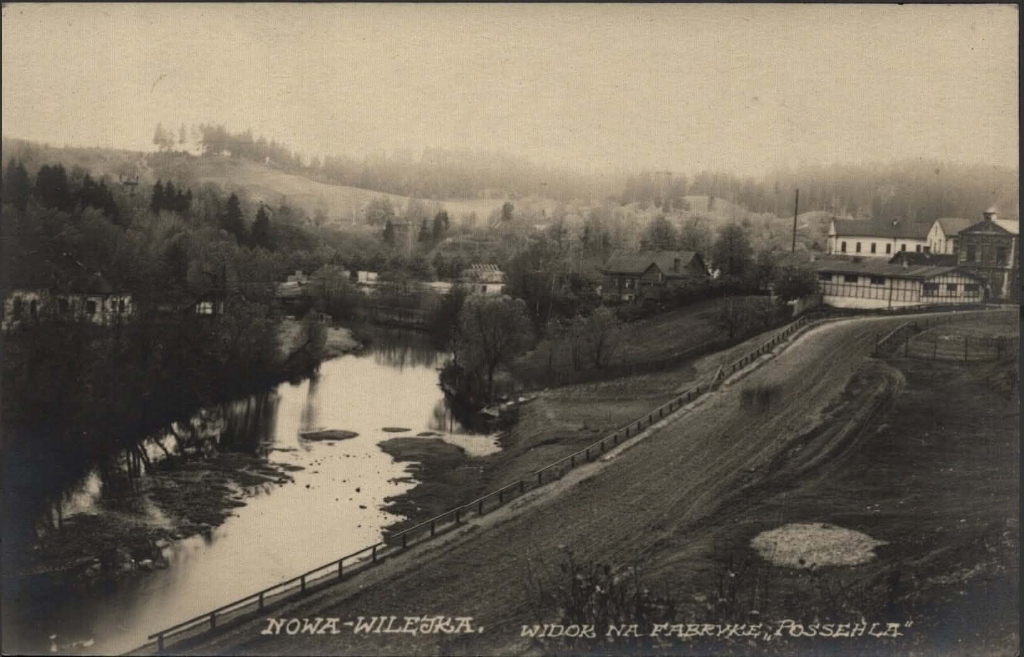
By the end of the 19th century, the factory had become one of the most important centers for scythe production in the region. In 1884, Emil Possehl, a German industrialist living in Lübeck, took over management of the factory. Thanks to him, production was modernized, and high-quality Swedish steel began to be used in the manufacture of scythes.
Specialists from abroad were invited to the factory - in 1887, about 60 engineers arrived from Austria. The scythes manufactured here were renowned for their quality and were called “litovkas.” Their production reached impressive levels - about 3 million scythes could be produced annually. The factory’s products were shipped not only throughout the Russian Empire but also to various countries around the world.
At that time, the factory was an integral part of the Naujoji Vilnia landscape. The massive factory was flanked by dozens of smokestacks and blacksmith’s forges, whose smoke constantly hung over the surrounding area. It was precisely this industrial landscape and the smoke-filled environment that later became one of the inspirations for the current name, “Dūmų fabrikas” (Smoke Factory).
After scythes - new life of the factory
In the summer of 1915, during World War I, the lights went out at the scythe factory. Thus ended one of the most remarkable eras in the industrial history of Naujoji Vilnia, which had lasted for more than three decades. The factory, which at the beginning of the 20th century was considered one of the largest and most technologically advanced scythe factories in the world, never returned to its previous production levels.
However, the building did not disappear. Its thick brick walls, tall production buildings, and infrastructure were adapted to meet new industrial needs. After the wars, other manufacturing companies set up operations here - and the factory’s history entered a new, far less studied phase.
Soviet-era production
During the Soviet era, the premises of the former scythe factory housed the “Construction and Finishing Machinery Factory.” This was a completely different type of production than that of the late 19th century - instead of scythes for agricultural use, the factory produced industrial machinery and equipment related to construction and finishing work.
And so, the old factory once again adapted to a new era. The building, originally designed for the production of Possehl scythes, became part of Soviet industry. Its purpose changed, but its manufacturing function remained - for more than a century, these spaces were not dedicated to luxury, but to work, production, and the bustle of industrial life.
This is an important part of the factory’s history, because the authentic space we see today is not merely a relic of the 19th century. It reflects several distinct industrial eras - those of Tsarist russia, the interwar period, the Soviet era, and independent Lithuania.
After independence - quite times
After Lithuania regained its independence, the factory’s history took yet another turn. The owners and the purpose of the buildings changed, and the former industrial complex gradually lost its former role. Production dwindled, some of the buildings fell into disuse, and the complex itself eventually began to fall into disrepair.
This was perhaps the quietest period in the factory’s history. In place of the machinery and the sound of blacksmiths at work that once filled the air here, all that remained were vast industrial spaces, brick walls, and traces of the past.
However, it was precisely during this period that the foundations for a new chapter in the factory's history began to take shape.
Abandoned factory to culture hub
A new perspective on the building began to take shape at the start of the 21st century, when increasing attention was being paid to Vilnius’s industrial heritage. The former factory came to be viewed not as an outdated industrial building, but as a unique space that could be adapted for a new purpose.
New life - Sakiškių alus
A completely different story - that of beer - has breathed new life into this historic industry.
In 2015, a small craft beer microbrewery was established in the village of Sakiškės. What began as a homebrewing project gradually grew into a professional brewery, whose guiding principle is to go beyond traditional flavors and constantly explore new beer styles and interpretations.
As production and demand grew, the brewery moved from Sakiškės to Vilnius in 2020, into the renovated premises of the historic Dūmų fabrikas. Thus, two histories that at first glance seem completely different came together under one roof: an industry dating back more than a century and the modern Lithuanian craft beer culture.
Sakiškės Brewery
After moving to the Dūmų fabrikas, the brewery became an integral part of the area. Sakiškės Brewery stands out for its experimental approach to brewing - here, beers of various styles, characters, and flavors are created.
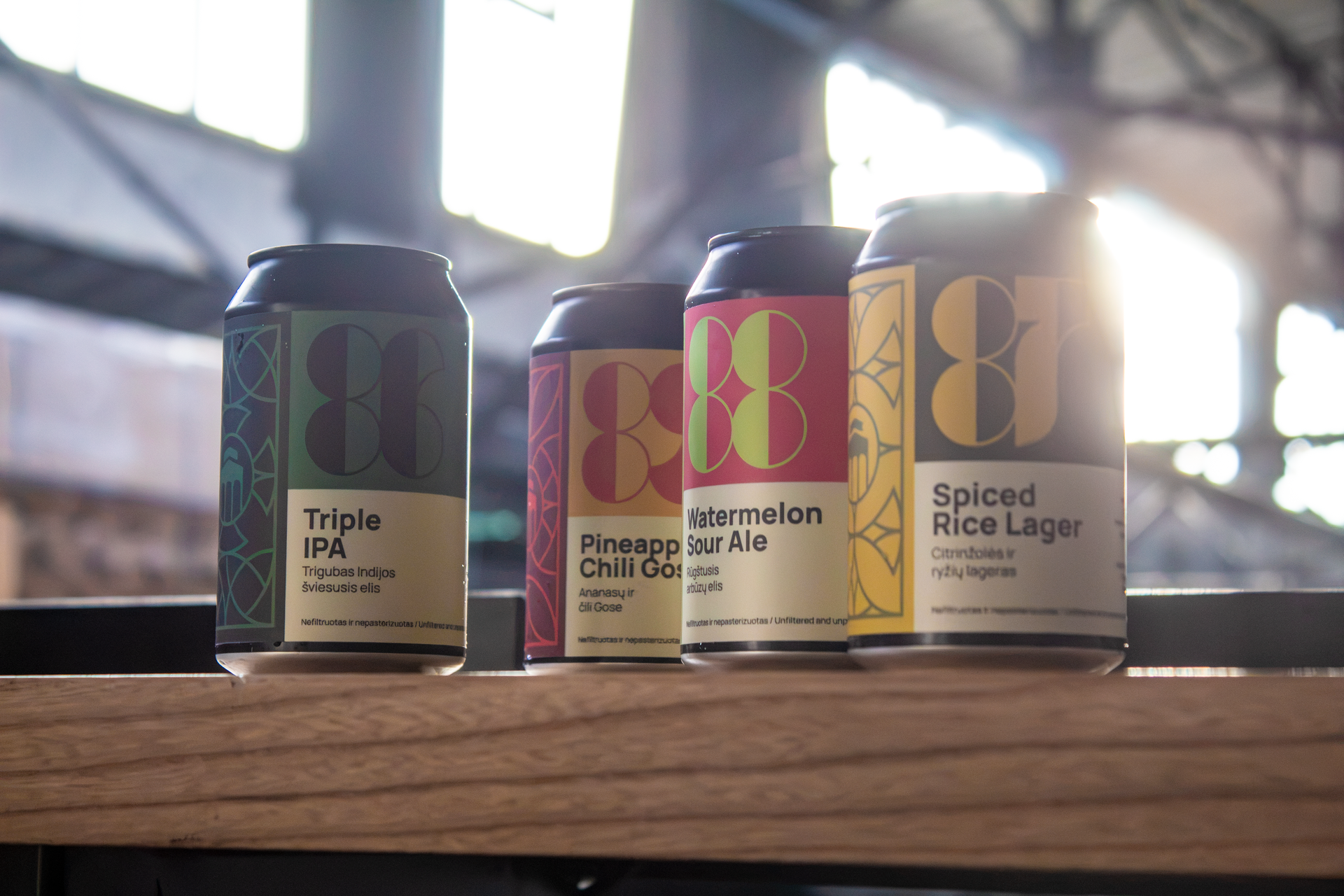
The brewery places great emphasis on natural ingredients and modern brewing technologies. The beer is brewed unfiltered and unpasteurized to preserve its natural aromas, flavors, and colors. New beer styles and recipes are constantly being added to the brewery’s lineup.
Over the years, Sakiškės Brewery has become well-known not only in Lithuania - its beer has also reached foreign markets, including Germany, Sweden, Japan, Austria, and the United States.
The “PUTOJA” festival, which began to be held there, has also added a splash of color to the factory’s present-day life, bringing in more and more beer from the farthest corners of the world and with it, a global audience that comes not only to taste the beer but also to learn about the building’s history.
Dūmų Brewery
Today, the former scythe factory has been given a new lease on life. In 2026, “Sakiškės Brewery” rebranded as “Dūmų Brewery” - a name that is directly linked to the place where beer is brewed today.
This is a symbolic continuation of history: once upon a time, blacksmiths’ forges blazed here, smoke rose from factory chimneys, and scythes were made; today, modern craft beer is brewed here.
Dūmų fabrikas has become not only a brewery but also a cultural and social hub. The renovated historic building, with an area of approximately 1,200 m², now houses the brewery, a tasting area, and event facilities. Concerts, exhibitions, performances, tastings, and other events are held here.
History that continues
The history of Dūmų fabrikas is more than just the history of a building or a single company. It is the story of a place that has changed its purpose many times over the course of more than a century, yet has retained its industrial character.
From Possehl scythes and “litovkas” to modern craft beer - the spirit of production is still alive here. Only today, instead of blacksmiths’ forges, beer fermenters bubble away, and the former noise of the factory is complemented by people’s conversations, music, and cultural life.
Dūmų fabrikas - a place where industrial history meets modern brewing and culture.